

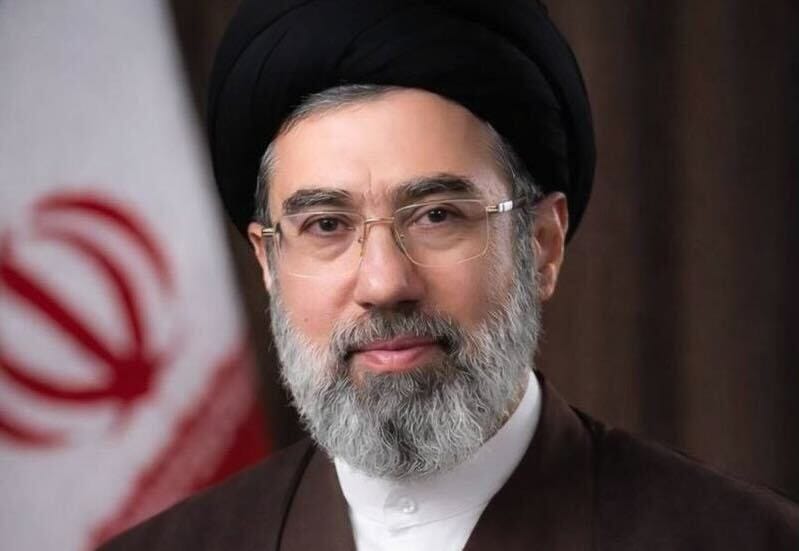
Ayatollah Ali Khamenei, the decades-long Supreme Leader of Iran, was killed in U.S.-Israeli strikes on Feb. 28 during the opening hours of a war aimed at taking out Tehran’s leadership and nuclear program.
One week later, Iran’s Assembly of Experts picked his son, Mojtaba Khamenei, to succeed him on March 8.
The 88-member clerical body selected the 56-year-old during one of the most dangerous moments in the Islamic Republic’s history. It marks the first time the leadership was transferred from father to son and follows the killing of his predecessor.
Mojtaba is virtually unknown to the Iranian public, but his influence runs deep within the regime’s political and religious system.
Who is Khamenei 2.0?
Mojtaba Khamenei was born in September 1969 in the Iranian city of Mashhad, one of the holiest cities for Shia Muslims.
By the time the Islamic Revolution occurred in 1979, his father was already a prominent cleric. He helped the first supreme leader, Ayatollah Ruhollah Khomeini, topple the Pahlavi monarchy and establish the current regime.
The following year, the Iran-Iraq War broke out, lasting for eight brutal years. Despite Mojtaba enlisting in one of the last years of the conflict, he began a lasting relationship with the Islamic Revolutionary Guard Corps (IRGC).
The group is Iran’s elite military wing that protects the regime at all costs. As a result, it has influence throughout the political system.
After the war, though, Mojtaba officially left the military to continue decades-long religious studies at various seminaries in Qom, another major Shia center of learning.
Despite his background, he never held an official clerical position, according to the BBC, but he kept contact with the IRGC and began immersing himself in regime circles.
Mojtaba’s father opposed his son’s succession
Ayatollah Ali Khamenei reportedly told the Assembly of Experts in a 2025 meeting he would not want Mojtaba to succeed him, according to the New York Times.
The late supreme leader had feared that choosing his son could set a hereditary precedent resembling a monarchy; a system the revolution topped 50 years ago.
Nevertheless, Mojtaba’s strong ties to the IRGC are widely believed to be one of the main factors in his ascension.
How are the United States and Israel viewing his ascendancy?
Not favorably.
United States President Donald Trump called Mojtaba Khamenei “unacceptable” to Axios on Thursday.
Israeli Prime Minister Benjamin Netanyahu is also against it.
When asked at a press conference Thursday about targeting Mojtaba, he said, “I wouldn’t take out a life insurance policy on any of the leaders” and called him a “puppet” of the IRGC.
Although both disapprove of Mojtaba, Trump and Netanyahu appear to have different plans for Iranian leadership.
Trump suggested the U.S. had some figures in mind to replace Ali Khamenei and not destroy the regime outright.
“Most of the people we had in mind are dead,” he said March 3, further indicating the disagreement, as Israel most likely killed them.
Netanyahu argued for decades that an Iran war should lead to regime change. Reza Pahlavi, the late Shah’s son, is reportedly his top pick.
Will he seek peace with the United States and Israel?
Mojtaba Khamenei will probably take a hardline stance alongside the IRGC, as many security officials see negotiations early in the war as a sign of weakness.
Moreover, the IRGC is behind most missile attacks targeting Israel, American bases across the Middle East and economic infrastructure in the Persian Gulf.
But a personal situation may also shape Mojtaba’s stance.
His mother, wife and daughter were killed alongside his father on Feb. 28, according to Iranian state media.
Therefore, it would be unlikely for the new supreme leader to seek immediate peace.