In January, Mohamad Altabaa, a third-year Texas Tech medical student, drove by an abandoned school, and had an idea.
“I don’t know how to explain it. The first time I came up to this building, I just saw the vision,” the 25-year-old recalled. “I didn’t see what it was, I saw what it could be.”
What he saw would have made the average person question his “vision.”
The Arnett Elementary School in Lubbock, Texas, had been closed for more than a decade. There was no electricity, gas or water, and even concerns about asbestos.
“Ninety-nine percent of people would’ve walked away,” Altabaa said.
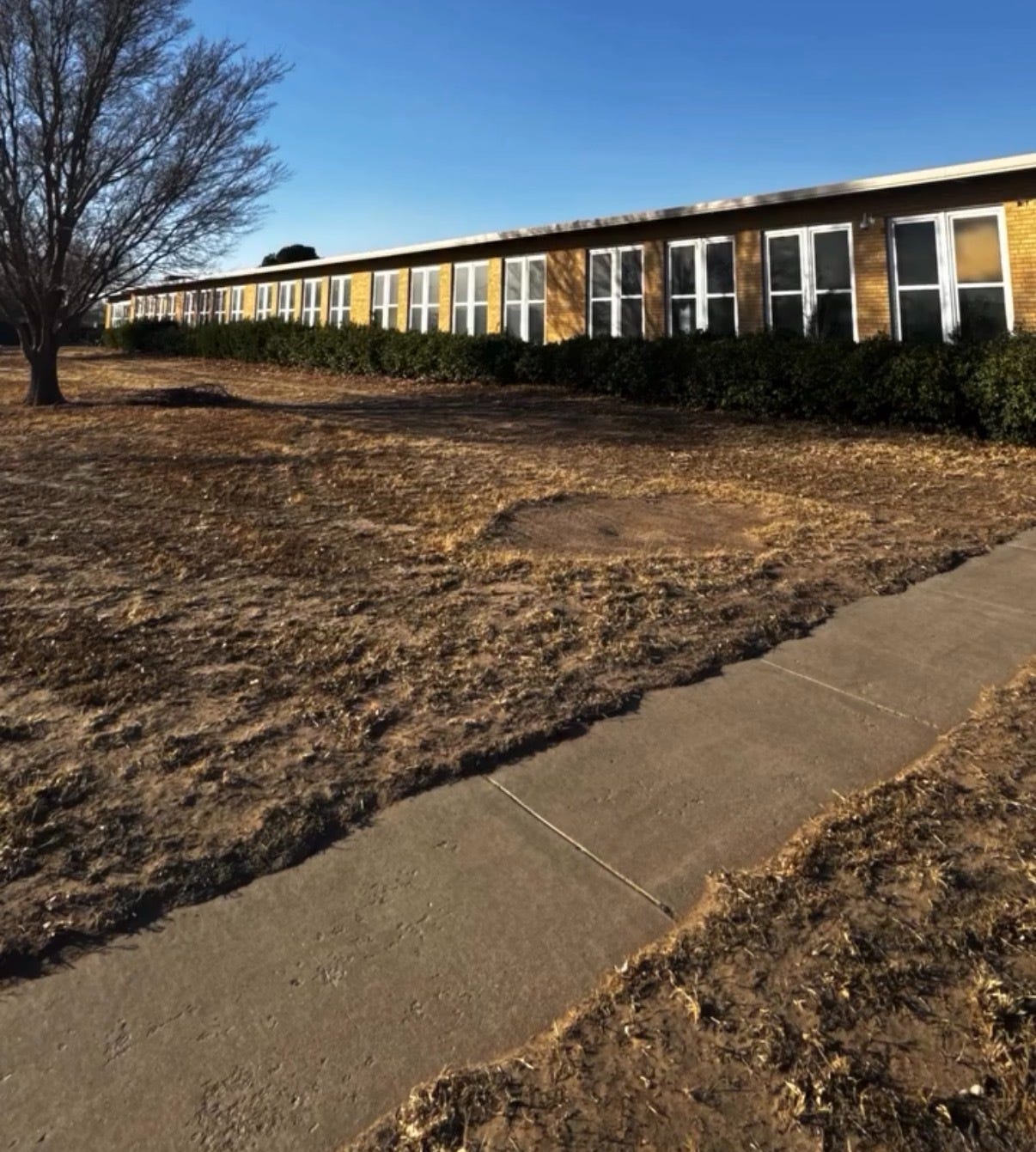
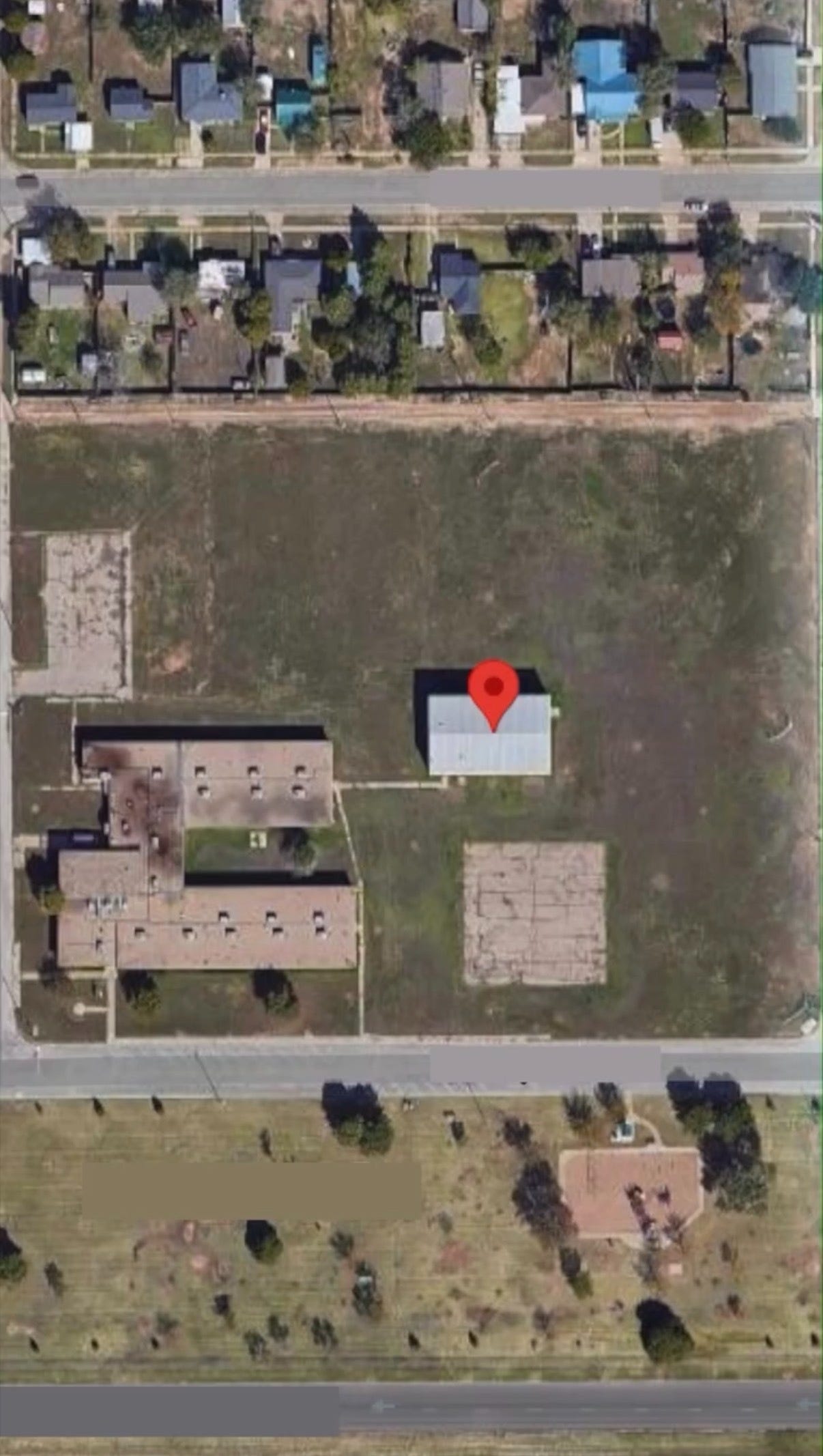
His goal was ambitious: transform the deteriorating, six-acre campus not only into a mosque, but into a thriving Muslim community hub, the Unity Center, and have it open by Ramadan.
At the time, the holy month was 45 days away.
Altabaa called up the realtor and had built a rapport with him. Little did Altabaa know however, that several people were already bidding for the property, wanting to transform it into either sports or industrial complexes.
“He called me and said ‘If you guys don’t put a bid in today, it’s getting sold,” Altabaa recalled.
So he called up a wealthy community member.
“I literally asked ‘Do you trust me?’ and they said yes,” Altabaa explained. “I said okay, I need to buy a school.”
Altabaa secured his first donor in a three-minute phone call, and bought the property below market value.
“Glory to God, that’s how the whole thing happened,” he said.
Altabaa’s excitement was short-lived though. Reality set it the moment he stepped inside.
I don’t know anything about construction,” he said. “Turns out, the building was in way worse condition than we thought. We found seven gas leaks. Seven.”
Saadedine Habbal, head the Unity Center’s maintenance committee and Altabaa’s classmate, described the situation.
“The lights were just ancient, and the bathrooms, you could just tell no human would have wanted to go in there,” Habbal said.
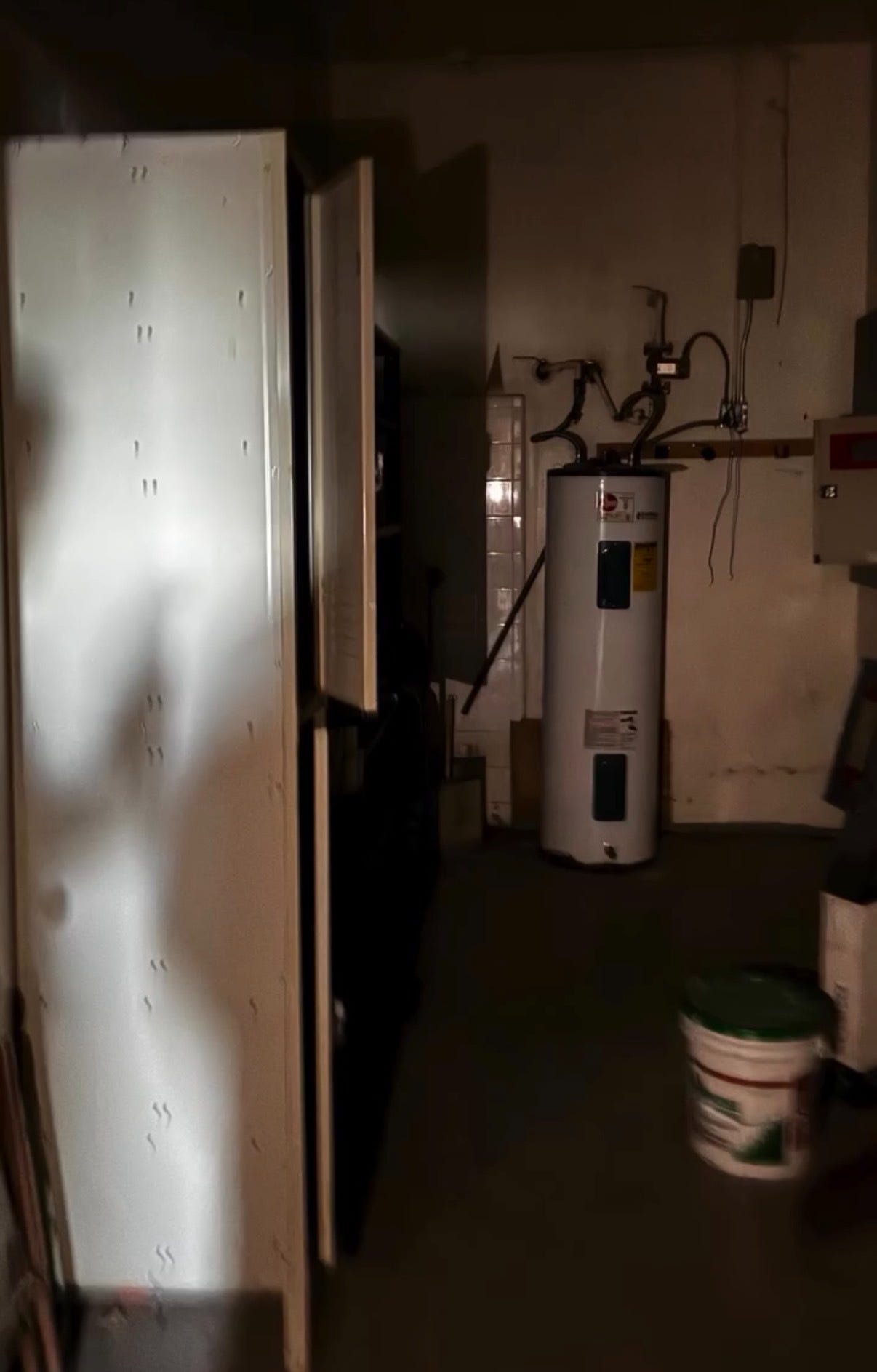
Instead of turning back, the two medical students did what they do best: research meticulously. They gathered some more classmates and created a five-member maintenance team and divided each task.
One handled the tech side, another dealt with the gas leaks. Others did landscaping and got connected with contractors to make sure things were done professionally.
But the team was too small. So Altabaa turned to social media.
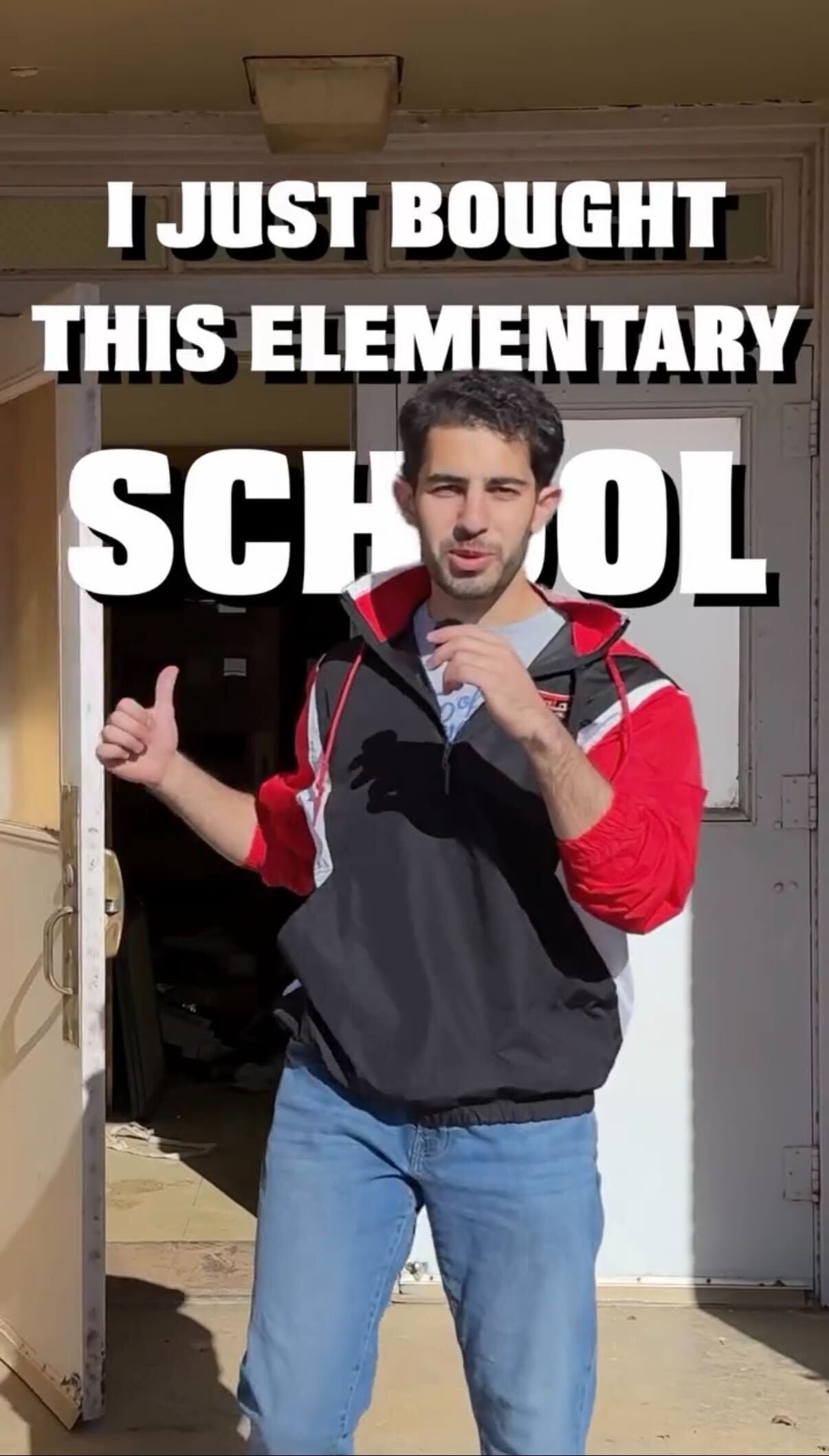
On Jan. 4, he posted an Instagram video about the property he bought and his vision.
It went viral, surpassing a million views.
“It changed everything,” he said.
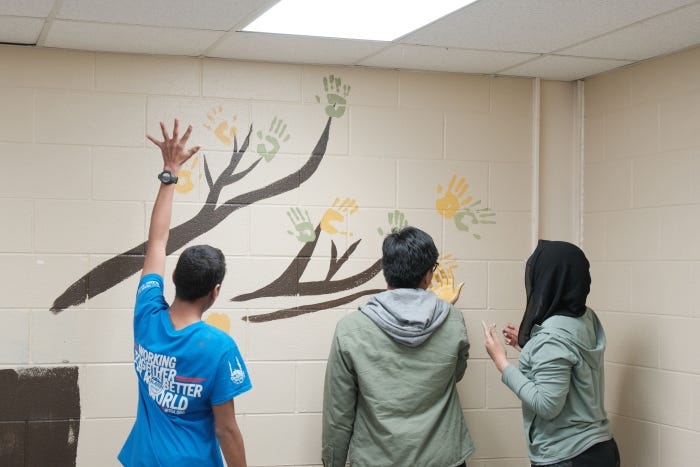
People began showing up to help, not only from Lubbock, but from across the country, according to Altabaa.
“We were averaging 60-70 volunteers in a city where maybe 10 percent of the population is Muslim,” he recalled. “People flew in from parts of California, Chicago, New York, Denver, just to help.”
Even local, non-Muslim contractors lent their services at a discount, according to Habbal.
“We found them from the neighborhood or even previous attendees of the school,” Habbal said. “They gave us amazing prices because they wanted to see it happen – to see this place flourish again.”
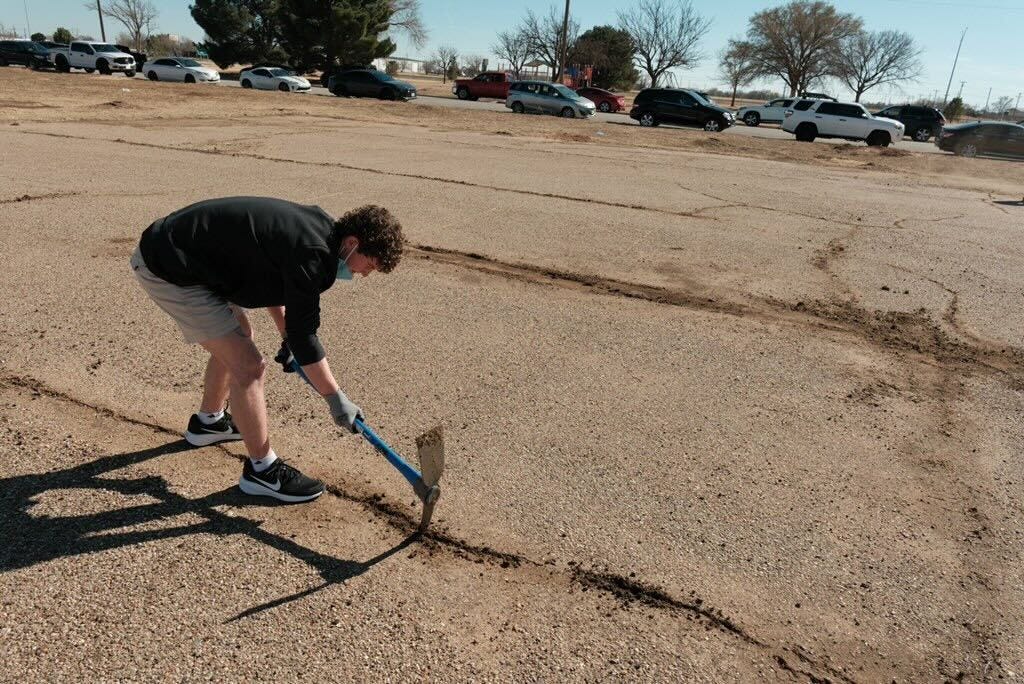
They even got help internationally.
The center raised more than $100,000 from a Launchgood fundraiser, averaging $55 per donation according to Altabaa.
“We had people donating from Zimbabwe, Great Britain, London, Singapore, Malaysia, Indonesia and Saudi Arabia,” he said. “That tells you this is a community project, built brick by brick.
Altabaa, like other Muslims his age, want to see mosques more than just prayer spaces.
“Mosques in Muslim-majority countries serve a very different purpose. You pray and leave,” he said. “But here (in the United States), we’re not a Muslim-majority country. We need spaces where people can hang out, relax and meet other Muslims.”
Because of the time crunch, Altabaa and his band of volunteers focused on the gymnasium because it was large enough for a prayer space, sports and community gatherings – a start to his vision.
They set up new lights, a professional sound system and even a game room, according to Altabaa.
He even told the local Muslim Student Association to make a wishlist of everything they wanted – which included a PlayStation 5, Nintendo Switch and a water fountain, to name a few.
“People asked if we’re going overboard,” he recalled. “I personally think that’s exactly the point.”
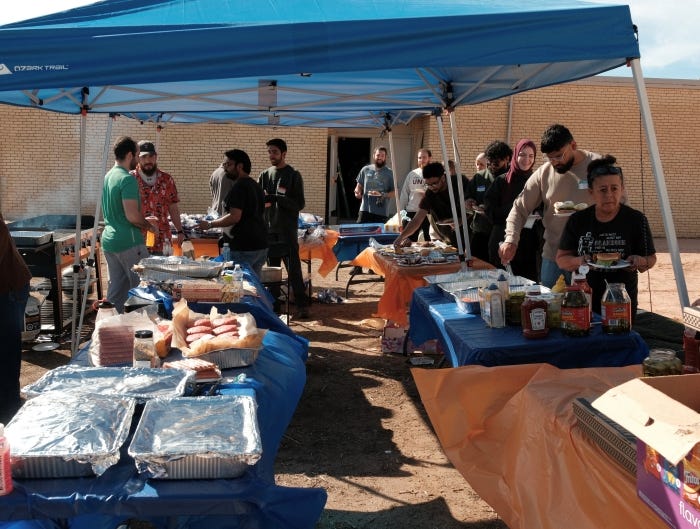
The Unity Center opened its doors on Feb. 18, the first day of Ramadan, and even held a community meal packing.
Both Muslims and non-Muslims made 30,000 meals for the homeless and had a barbeque.
On the first night of the holy month, Habbal estimated that more than 500 people filled the space for Taraweeh prayers.
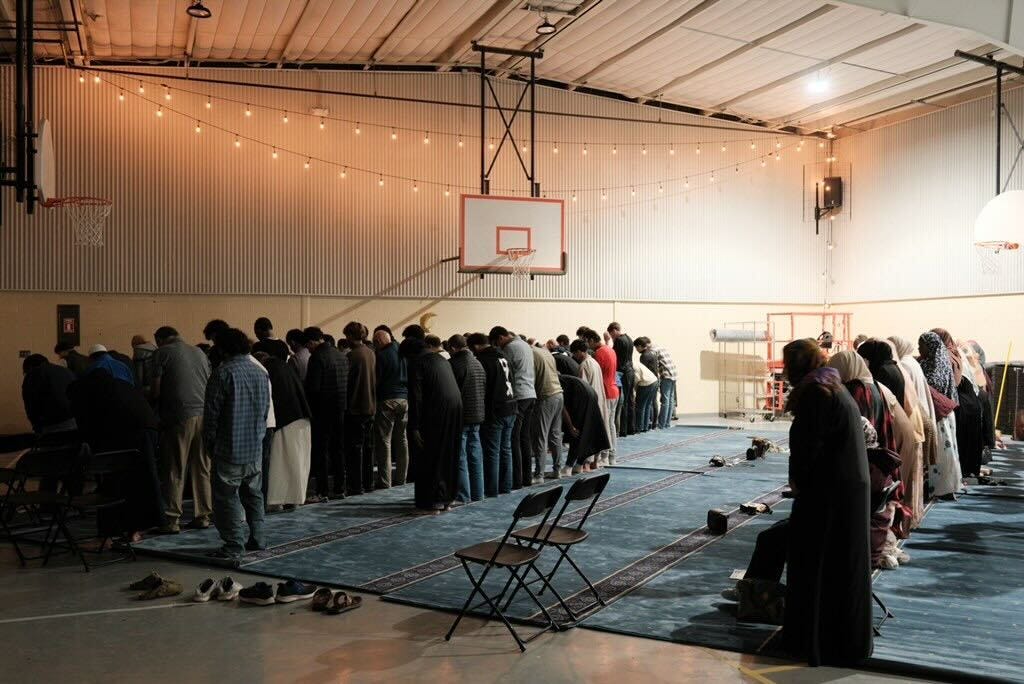
What happened next, according to Altabaa and Habbal, showed them why they truly built this center from scratch.
“Right after we finished Taraweeh, we rolled up the carpets, and kids immediately starting playing basketball,” Habbal recalled. “We then put up a ping-pong table, set up the Nintendo Switch, and the uncles and aunties each had rooms to get together and drink tea.”
“It was a place of worship that immediately turned into a community center,” he added.
Despite the wide variety of support, though, not everyone has been excited about the Unity Center.
Texas has been dealing with Islamophobia, not only from far-right figures like Amy Mek – who called the initiative “expanding the Islamic conquest” and alleged that the center was tied to the Muslim Brotherhood – but even from the government.
Texas Gov. Greg Abbot designated the Council on American-Islamic Relations (CAIR), the largest Muslim advocacy group in the country – a foreign terror organization in November 2025. The group has since sued the governor, claiming he is violating their First Amendment Rights.
These attacks, as Habbal sees it, are simply from skeptics who don’t really know Muslims.
“It’s easy to spread fear because fear sells,” he said. “But I urge people: come meet us. We want the same things in life… just come say hi and you’ll see we are exactly the same.”
The Unity Center is still renovating the six-acre campus, aiming to use it entirely, according to Altabaa.
Despite the hateful rhetoric and the work that lies ahead, Altabaa turns to his faith for continued inspiration.
“Our religion says that even if the Day of Judgement is tomorrow and you have a seed in your hand, plant it,” he said, referencing a Hadith, or saying, of the Islamic Prophet Muhammad. “You might never eat from the fruit of that seed, but maybe your kids will. Maybe your grandchildren. Or, maybe nobody will. But you will plant it anyway.”