

Eight months ago, the U.S. launched precise strikes on three key Iranian nuclear facilities. It was during Iran’s 12-day war with Israel, which fell short of a full American entry.
The strikes were driven by Washington’s demand on Tehran to end its nuclear program.
A few months prior, in May 2025, the International Atomic Energy Agency (IAEA) reported that Iran had 880 pounds of 60 percent enriched uranium - 90 percent is required for a nuclear warhead.
Tehran has maintained that its nuclear program is for civilian purposes.
The issue has not been resolved and is causing the Middle East - still recovering from the effects of the Gaza war - to brace for another potential conflict.
Escalations amid negotiations
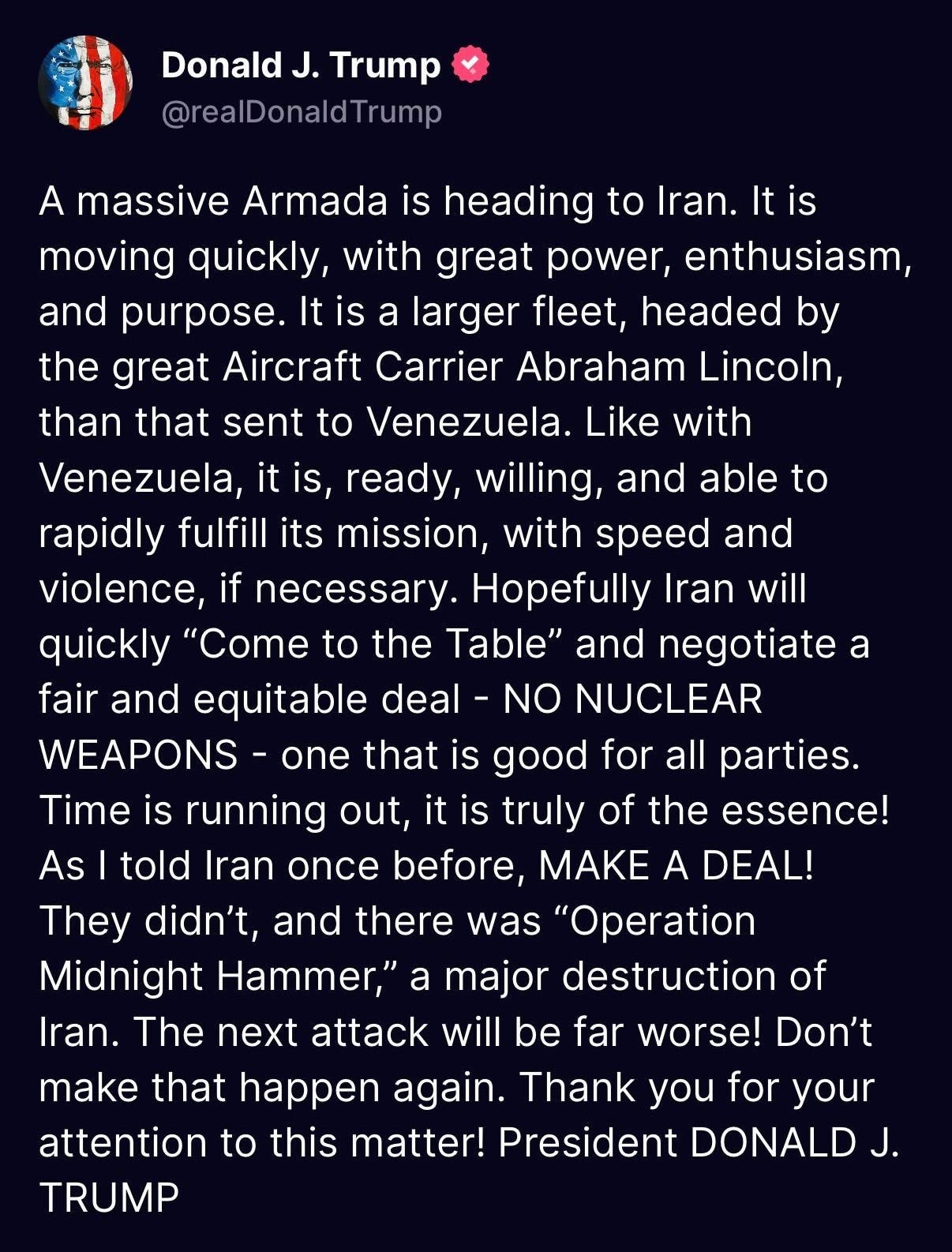
On Jan. 28, 2026, President Donald Trump warned on Truth Social that “a massive armada is heading to Iran,” and if Tehran didn’t “come to the table… the next attack will be far worse!”
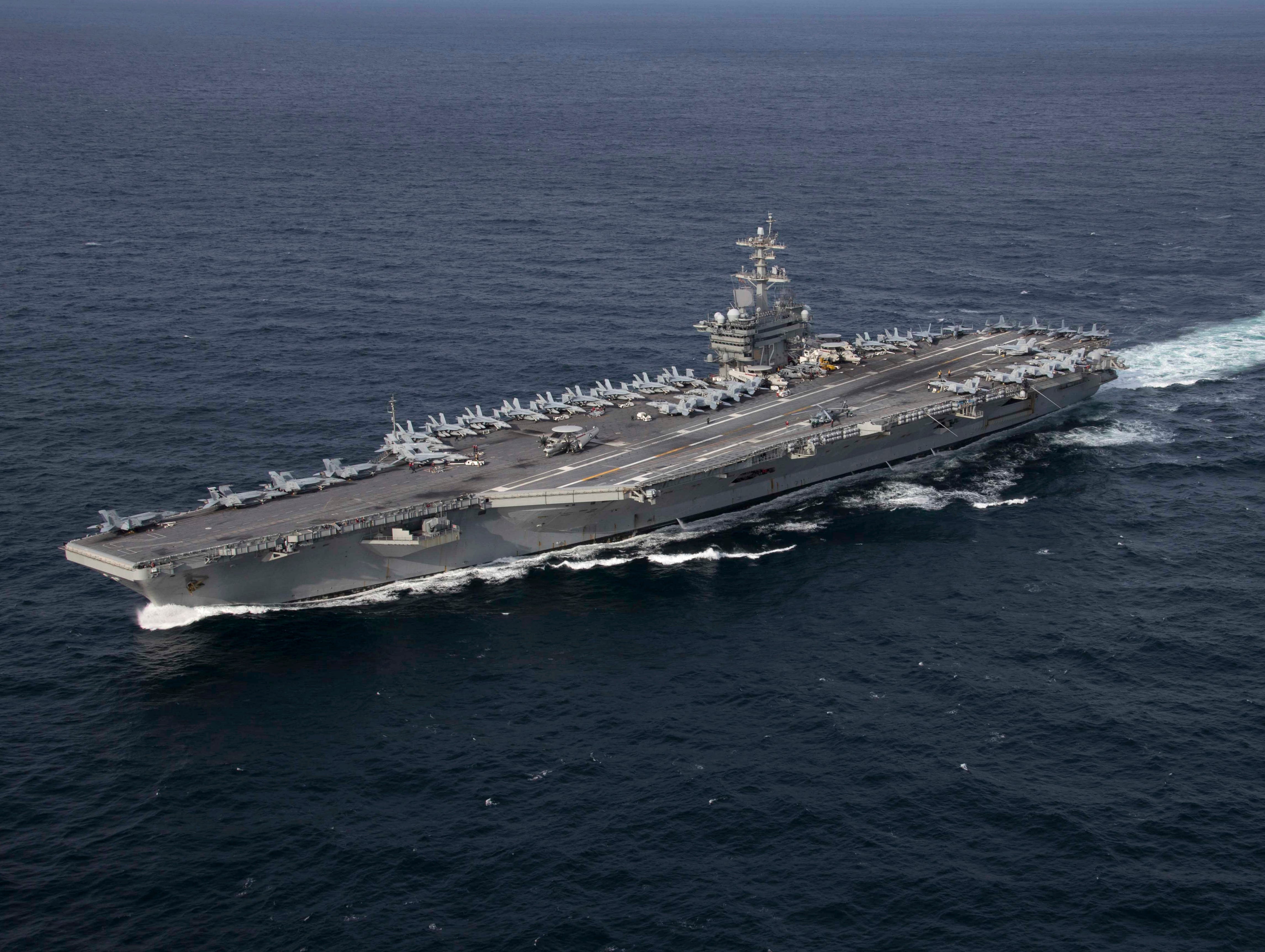
Several warships, including the massive aircraft carrier USS Abraham Lincoln, were deployed to the Arabian Sea, off the southern coast of Iran, according to CENTCOM. The buildup has been widely reported as being far larger than that of the Iraq war.
In response, Iranian Foreign Minister Abbas Araghchi said his nation’s military has “their fingers on the trigger,” and would “immediately and powerfully respond” to an attack.
Despite the threats, particularly from Trump, American and Iranian diplomats have been holding de-escalation talks, first meeting in Oman earlier this month, then in Davos.
Another meeting is scheduled in Geneva on Thursday, nearly a week after Trump gave Tehran a deadline of “10-15 days.”
Does Trump want war?
His public statements suggest reluctance, preferring instead to force Iran into submission at the negotiating table through intimidation - though military action isn’t being ruled out.
At a White House breakfast last week, Trump responded to a reporter’s question on the issue of limited strikes instead of war.
He said he was “considering” limited strikes.
Predicting what will happen is tough, even for experts. However, former U.S. envoy to the Middle East, Dennis Ross, argued in a Politico op-ed that both sides don’t want a war, even Trump.
“He (Trump) thinks that he can use limited force for coercive purposes to achieve a deal and that the Iranians have an interest in keeping the conflict limited,” Ross wrote.
How does this matter for Trump politically?
Trump is flirting with the idea of some sort of military action. But another war in the Middle East could spike oil prices and wreak havoc on the U.S. economy, a crucial component of presidential approval.
Already dealing with public pressure on affordability issues and the Epstein files, Trump’s current ratings are less than 42 percent, according to Decisions Desk HQ. A war would surely push it lower.
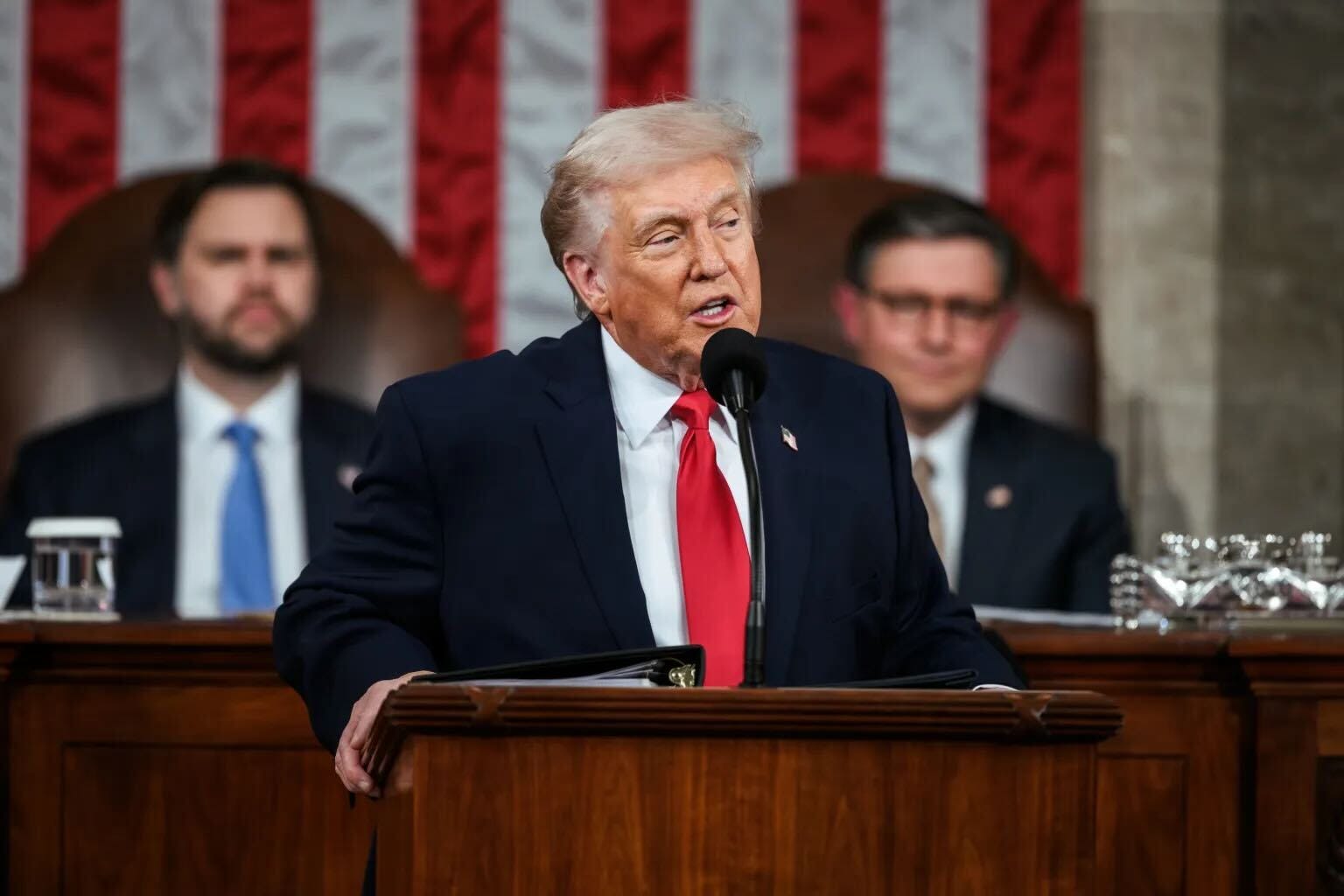
At his State of the Union address Wednesday night, Trump said his “preference is to solve this problem through diplomacy,” before issuing another warning to Iran.
Trump has repeatedly framed himself in his second term as a peacemaker, although he has ordered strikes on several countries, even a full-on attack on Venezuela in January.
But he still claims credit for ending the war in Gaza through the establishment of his Board of Peace, and the Azerbaijan-Armenia and India-Pakistan ceasefire agreements.
Moreover, one of his campaign promises was to end “forever wars.” A full conflict, especially one with troops on the ground within Iran’s territory, would surely undermine his framing.
What’s next?
For the moment, Washington’s aggressive stance appears as leverage. However, Trump’s deadline is approaching, and despite the wishes of both governments to avoid war, a miscalculation could sow unavoidable repercussions.